
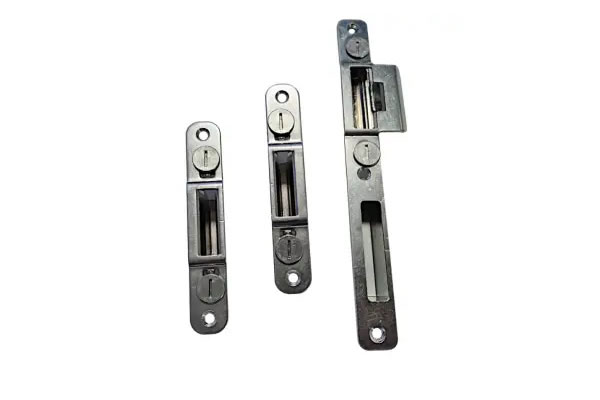
What Are Door Keeps? A Simple Guide for Homeowners
When homeowners think about door security, they typically focus on the lock, the handle, or perhaps the cylinder. However, there is another component that plays an equally important role, yet rarely receives the attention it deserves: the door keep.
Keeps are essential to how your door locks, seals, and performs over time. Across Peterborough, Huntingdon, and the surrounding areas, we frequently find that door problems blamed on faulty locks actually stem from poorly positioned or incorrectly specified keeps. This guide explains what keeps are, why they matter, and what every homeowner should understand about this often-overlooked component.
What Is a Door Keep?
A keep (sometimes called a striker plate or receiving plate) is a metal component that sits in the door frame. It receives and holds the locking points when you close and lock the door.
When you lift the handle on a composite door, the hooks, bolts, and cams extend outward from the door edge. These locking points need somewhere to go. The keeps act as precisely positioned metal receivers in the frame, catching and holding each locking point securely.
In simple terms: the lock extends the bolts, and the keeps catch them. Without correctly positioned keeps, even the finest multi-point lock cannot secure your door properly.
Types of Keeps
Different locking points require different types of keeps. A typical composite door with a multi-point lock will have several keeps positioned along the frame edge.
Hook Keeps
These receive the hook bolts that provide primary security. Hook keeps have a shaped opening that allows the curved hook to enter and grip securely. The hook rotates into position behind the keep, creating strong resistance to forced entry.
Deadbolt Keep
The deadbolt keep receives the main deadbolt, usually located at handle height. This is the primary locking point that engages when you turn the key after lifting the handle.
Roller and Cam Keeps
Rollers and mushroom cams are locking points designed primarily for compression. Their keeps are shaped to draw the door tightly against the weather seals when the handle is lifted. This improves thermal performance and reduces draughts.
Latch Keep
The latch keep receives the sprung latch that holds the door closed before locking. This is the component that clicks into place when you push the door shut.
Why Keep Positioning Matters
The position of each keep must align precisely with its corresponding locking point. If a keep is even a few millimetres out of position, problems occur:
- Hooks may not engage fully — reducing security and making the handle difficult to lift
- The deadbolt may bind or miss the keep entirely — preventing the door from locking
- Compression points may not draw the door tight — causing draughts and seal failure
- The latch may not catch — the door will not stay closed without holding it
Across Peterborough and Huntingdon, we are regularly called to doors where the lock appears faulty, but the actual issue is keep alignment. The lock mechanism is functioning correctly, but the keeps are not positioned to receive the locking points cleanly.
Adjustable Keeps: A Feature Worth Requesting
Quality door installations use adjustable keeps. These are designed with slotted screw holes or adjustment mechanisms that allow the keep to be repositioned slightly after installation.
Adjustable keeps are valuable for several reasons:
Initial Fine-Tuning
Even with careful installation, minor adjustments are often needed once the door is hung and operating. Adjustable keeps allow the installer to achieve precise alignment without removing and refitting components.
Compensating for Settlement
Over time, doors can settle slightly, hinges can wear, and frames can shift. Adjustable keeps allow these changes to be accommodated through minor repositioning, restoring smooth lock operation without replacing parts.
Seasonal Movement
Temperature and humidity changes affect door and frame materials. Adjustable keeps provide the flexibility to account for slight seasonal variations, particularly in older properties or those with timber subframes.
When comparing door quotations, it is worth asking whether adjustable keeps are included. They represent a small detail that makes a significant difference to long-term performance and ease of maintenance.
Signs Your Keeps May Need Attention
Homeowners across Peterborough and Huntingdon often contact us describing symptoms that indicate keep problems:
- The handle is difficult to lift — locking points are binding against misaligned keeps
- You hear grinding or scraping when locking — hooks or bolts are catching on keep edges
- The door locks but feels loose — keeps are too far from the locking points, reducing compression
- Draughts around the door edge — compression keeps are not drawing the door tight against seals
- The lock works intermittently — alignment varies depending on temperature or pressure on the door
These issues are typically correctable through keep adjustment or replacement, often without any need to change the lock itself.
Keep Quality and Material
Keeps are manufactured from various materials. Higher-quality keeps are made from steel or zinc alloy and are designed to withstand repeated engagement without wearing or deforming.
Lower-quality keeps, particularly those made from thin or soft metal, can wear quickly. The shaped openings become rounded or enlarged, reducing the grip on hooks and bolts. When we replace keeps for customers across the Peterborough area, we use robust components that will maintain correct engagement over years of use.
Professional Assessment and Adjustment
If your door is not locking smoothly, or if you notice any of the symptoms described above, the keeps are a likely factor. Before assuming the lock has failed, it is worth having the complete system assessed.
We carry out keep adjustments, replacements, and full door assessments across Peterborough, Huntingdon, and the surrounding villages. Often, what appears to be a significant door problem can be resolved through careful attention to these small but essential components.
Clear diagnosis, quality parts, and local service. That is Peterborough Doors.